
Hattie Harnden, 21 Monster cans and mountain biking at its best
I went to Les Gets expecting a huge clean-up. What I found was a mountain being cared for, and a World Cup winner putting that care into action.
On my first morning in Les Gets, I stood at the start gate of a World Cup downhill track with a litter picker in my hand and watched Jackson Goldstone drop in.
It was not a bad way to begin a trail clean.
I was in Les Gets as part of the Trash Free Trails A-Team, its ambassador programme, collaborating with the UCI Mountain Bike World Cup and Monster Energy from Thursday 20 to Sunday 23 August. We were given access to the downhill track while it was closed to the public but open for practice for the pros. As the professionals flew past us, we worked our way from the very top of the course to the bottom, looking for every piece of litter we could find.
I had arrived expecting there to be plenty.
This was a downhill World Cup, after all. Les Gets is famous for its enormous, exuberant crowds would add up to a fairly substantial clean up. Instead, across the entire downhill track, we collected just 88 individual pieces.
There were old wrappers and small fragments of plastic, along with a few pieces of electrical tape near the broadcast towers. Some had probably been left by previous events; other bits could simply have fallen from pockets. But there was remarkably little of it. Before the first spectators had even arrived, the mountain was already incredibly clean.
The question was whether it would stay that way. Monster planned to sample 40,000 cans over the weekend, but how many would find their way to a trash bag?
World Cup chaos, without the expected aftermath
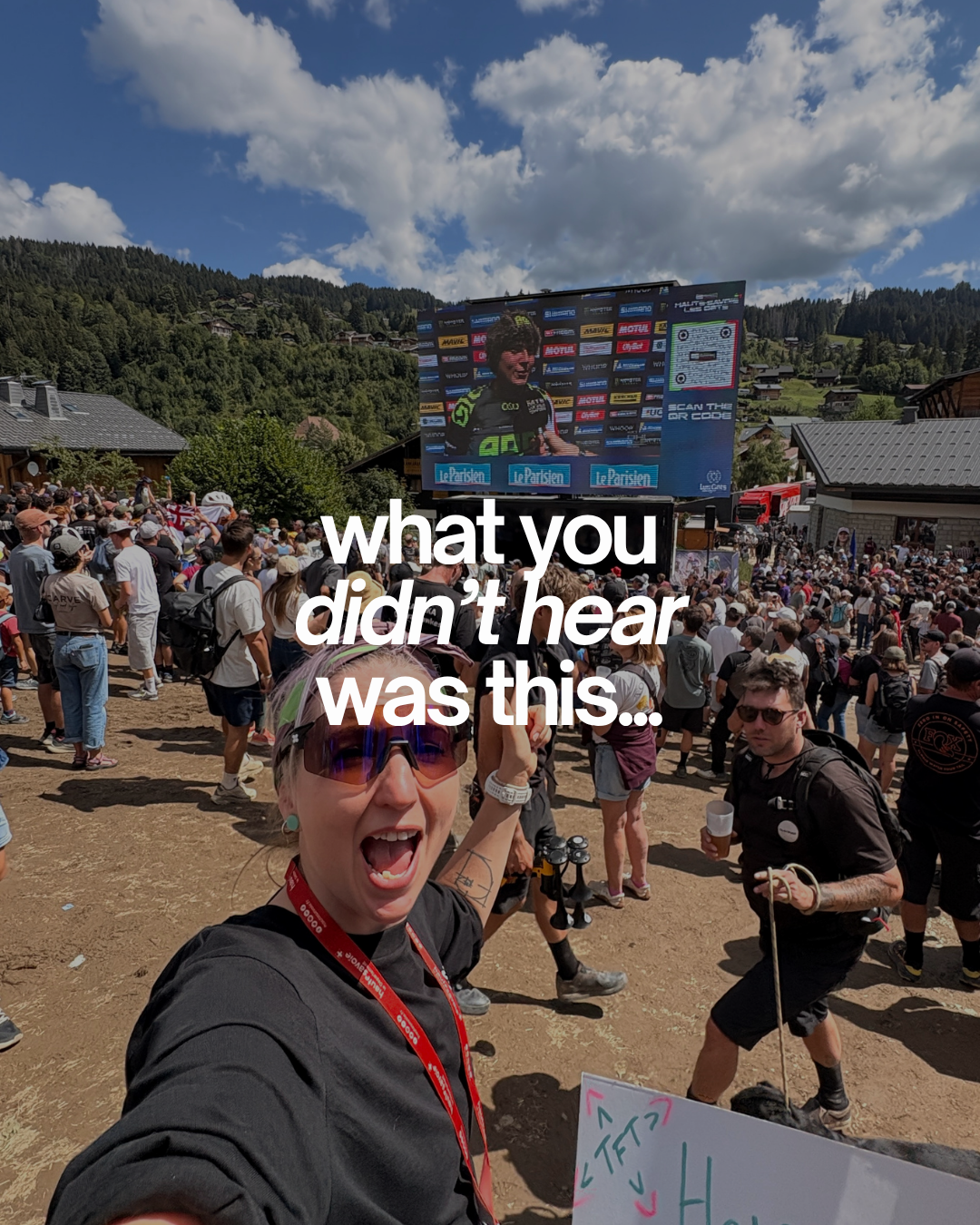
Les Gets during a World Cup is completely wild. Athletes, spectators, teams and organisers are all compressed into one tiny Alpine town. The chainsaws are relentless. The crowds are loud, tightly packed and fully committed. Music blares from the nightclub until late, then the next morning you look up and see a cross-country rider warming up on rollers on their balcony.
It feels like the entire spectrum of mountain biking has been squeezed into the same few streets.
For the rest of the weekend, our role was partly practical and partly about being present. We spent time near the Monster sampling areas, walked around talking to people about Trash Free Trails and looking after the mountain, picked up what we found and creating content as the event unfolded.
I kept waiting for the litter to appear. Mostly, it didn’t.
Then Hattie won
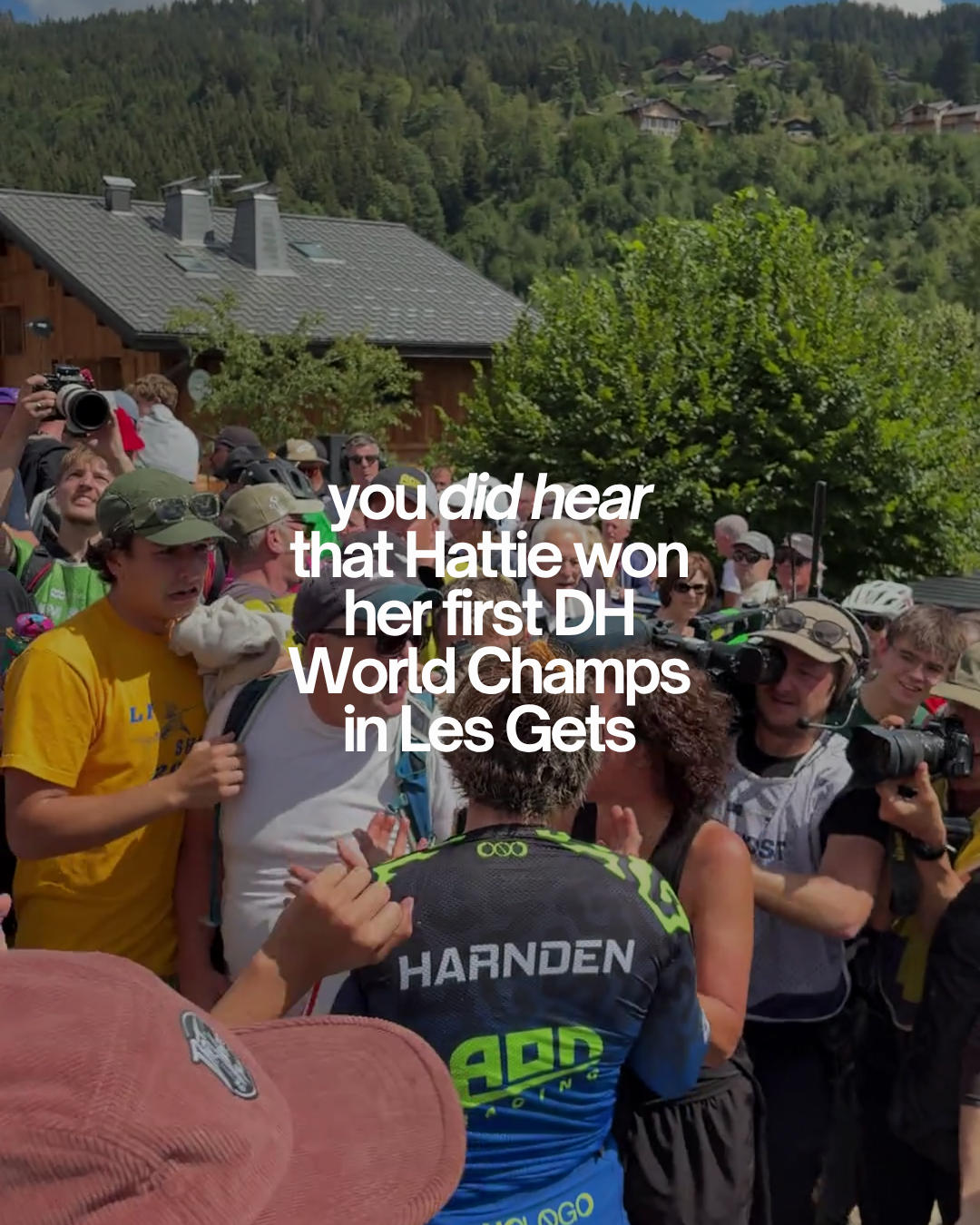
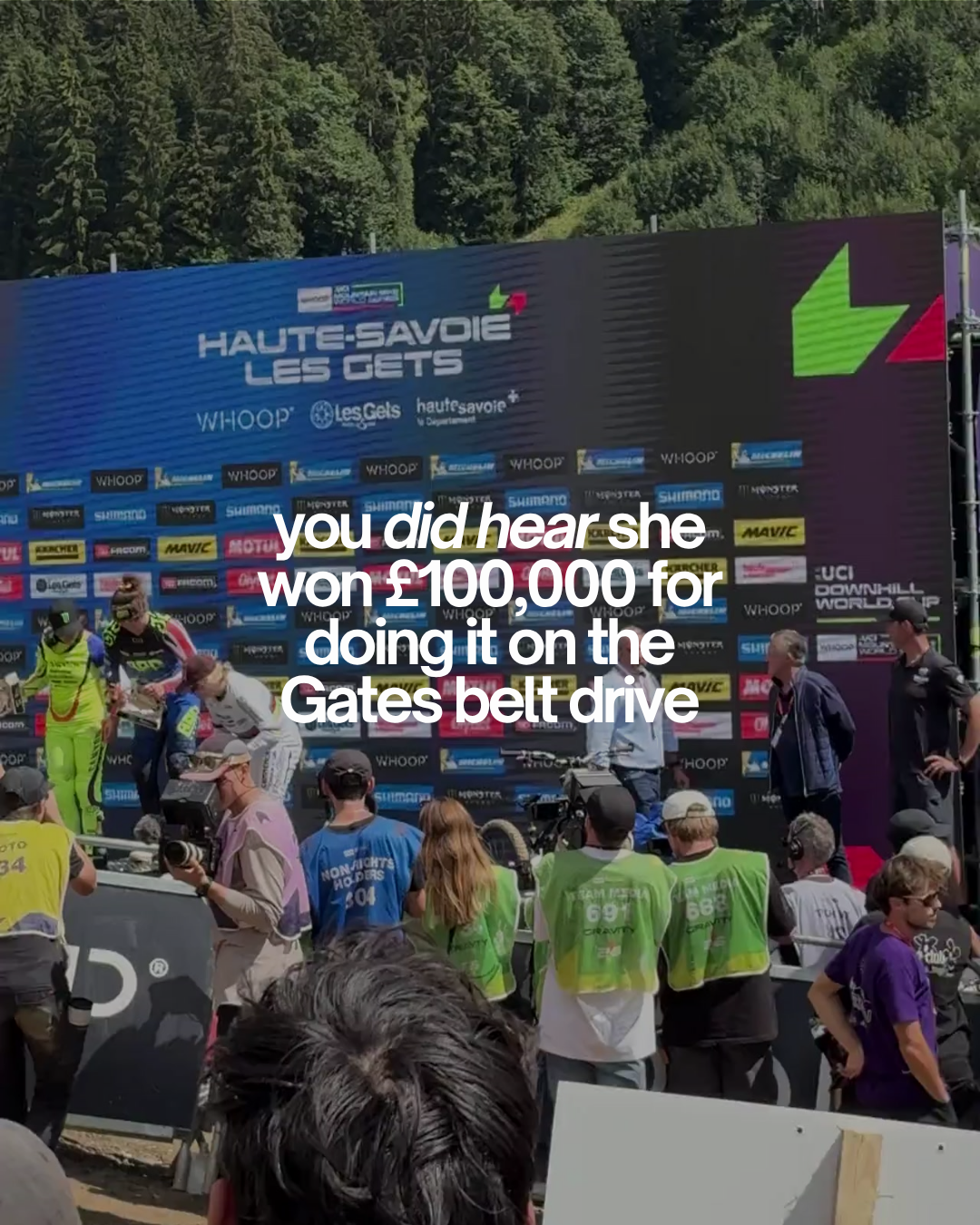
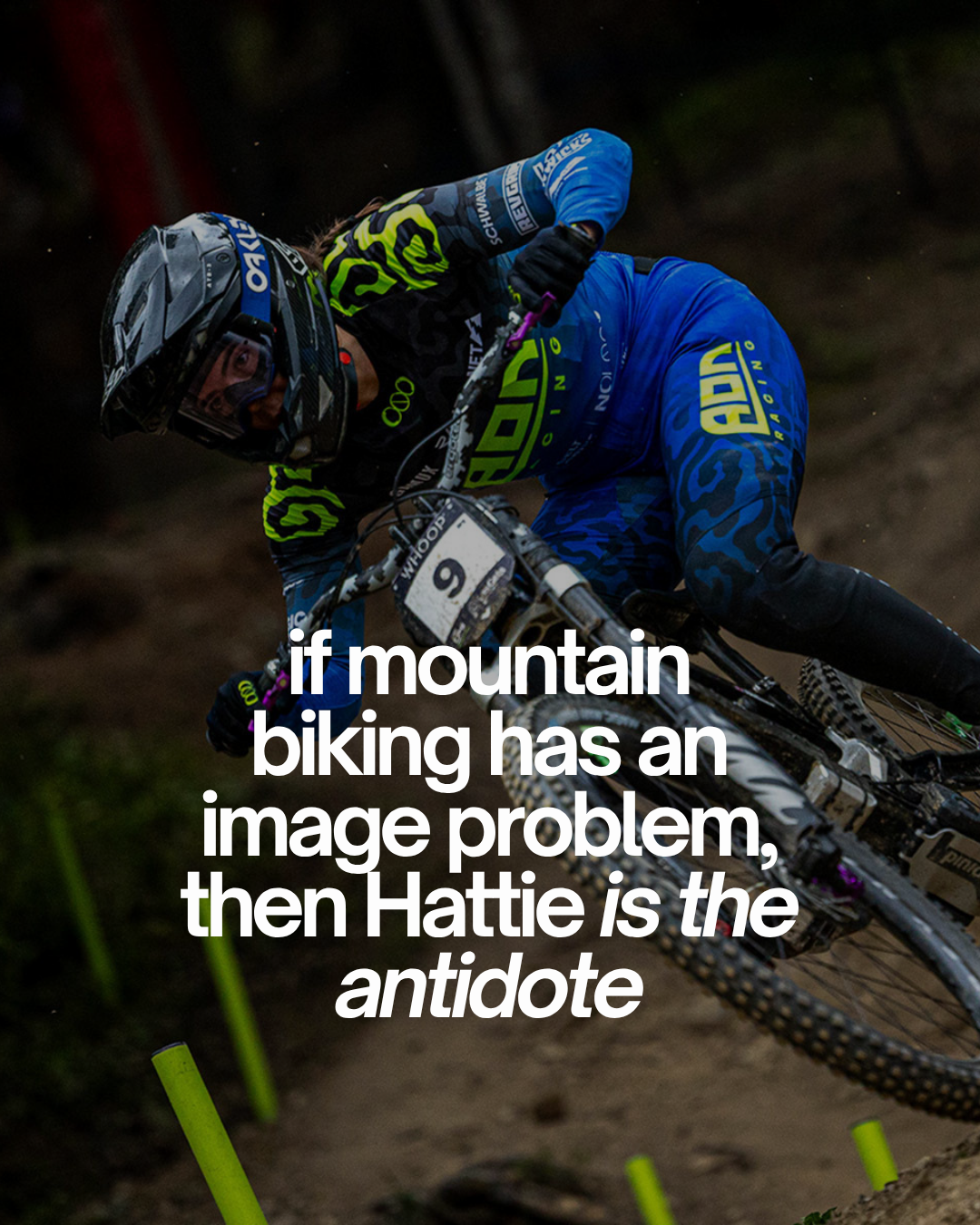
On Saturday, Hattie Harnden took her first elite downhill World Cup victory.
It was the sort of result that would make abandoning every other plan for the day entirely reasonable. There were interviews to do, a team to celebrate with and a first World Cup win to absorb. Nobody would have blamed her for deciding that her pre-arranged commitment to a Trash Free Trails trail clean could wait.
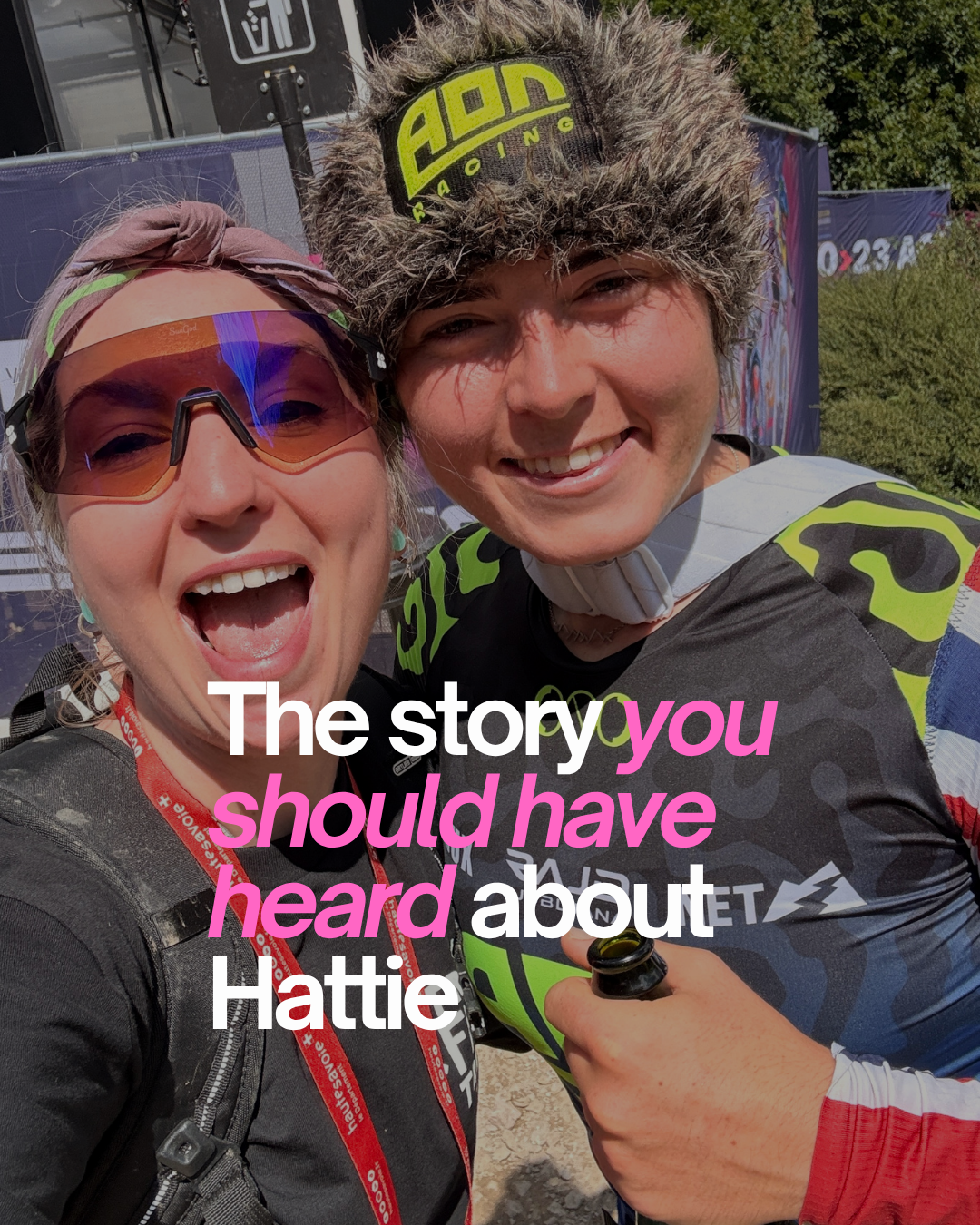
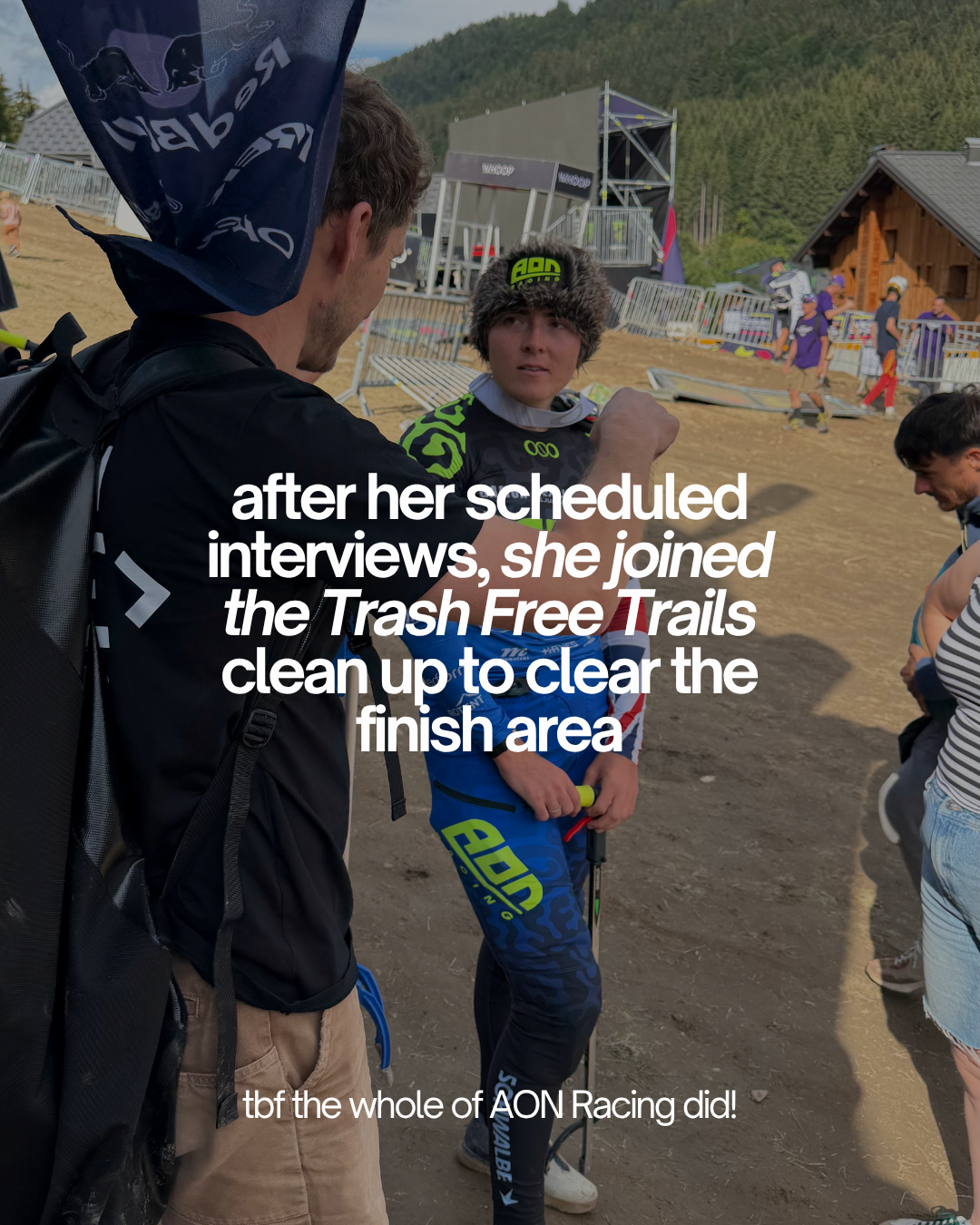
AON Racing had agreed to join us before the race. By the time Hattie had finished her interviews, the rest of the AON Racing crew were already beginning to make their way to the track. Then she appeared, still in her race kit, and got involved.
She walked the downhill track picking up rubbish, chatting to people and generously allowing everyone around her to share in a little of her success. She could have gone to celebrate. Instead, she put the celebrations on pause and showed up for something that offered her no performance advantage and no bigger result.
That mattered.
At the sharp end of mountain biking, we are very good at celebrating speed, bravery, huge sends and winning. Those things are exciting; they are part of why people love the sport. But responsibility for the places we ride, and for making the culture around riding more welcoming, has not always been made as visible.
I have spent a lot of my own work thinking about the ways mountain biking has been structured without always feeling welcoming to women (take a look at Project FIAS for a deep dive into this.) I don’t think one trail clean fixes that, and I don’t want to turn Hattie into a symbol for every issue within the sport. I simply think she set a brilliant example.
Ride hard. Win races. Celebrate properly. But recognise that being a role model can include what you do once the timing stops, too.
We protect the places we feel connected to
The weekend reinforced something at the heart of Trash Free Trails’ work: nature connection matters.
Les Gets is a place people actively use, love and feel part of. Riders know its tracks, spectators travel to stand in its forests, athletes build pivotal moments of their careers there. That does not automatically make everyone a perfect steward of the landscape, but I do think that connection changes how people behave.
This weekend was not scientific proof of a neat equation between loving a place and leaving it spotless. It was one experience, at one event. But it was difficult not to see a relationship between the awe people felt for the mountain and the care they showed it.
On Monday, once my Trash Free Trails work was finished, I finally had a day to ride. I headed out into the mountains for an eight-hour training ride of ridiculous savagery. It was also a chance to experience more of the landscape beyond the World Cup tape. It felt like a quiet full stop to the weekend: first helping to care for the place, then getting to enjoy it for myself.
Mountain biking does not need to become less loud, less exciting or less gloriously strange. Les Gets proved that thousands of people can bring all of that energy to a place and still treat it with respect.
And Hattie showed that even on the biggest day of your career, there can still be time to give something back.
Find out more about Trash Free Trails and the awesome work they do here.